Thursday, March 26, 2009

Otoliths 11 print edition

Otoliths issue 11 (Southern Spring) is now out in a print edition, in two books. I have three poems in Part One (“Angles,” “Poem Written at Work,” “July 12th”). Though the poems are online, the print edition is a great thing too. It can be ordered here.

The full details are:

156 pages, 6” x 9”, perfect binding, black and white interior ink.

Otoliths issue eleven, part one, contains work by Anny Ballardini, Halvard Johnson, dan raphael, Doug White, harry k stammer, Eileen R. Tabios, Cara Benson, Angela Genusa, Craig Rebele, Gregory Braquet, David-Baptiste Chirot, Vernon Frazer, Elizabeth Kate Switaj, Stephen C. Middleton, John Moore Williams, Marcia Arrieta, Raymond Farr, Felino Sorriano, Charles Mahaffee, Jeff Harrison, Steve Wing, Robert Gauldie, Philip Byron Oakes, Iain Britton, Thomas Fink, Thomas Fink and Maya Diablo Mason, Bill Drennan, J. D. Nelson, Julian Jason Haladyn, Charles Freeland, John M. Bennett, Jaie Miller, Naomi Buck Palagi, Tom Beckett, Paul Siegell, Geof Huth, Martin Edmond, Andrew Topel, Michael S. Begnal, and Michele Leggott.

Friday, March 20, 2009

Begnal featured in Eyewear

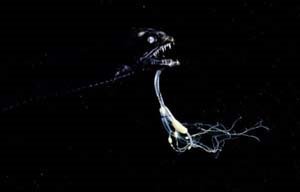
I am the latest Featured Poet (here) on Todd Swift’s blog-site and review, Eyewear. Swift’s piece includes my poem “The Fluctuations,” and I hope you will all check it out. Maybe even leave a comment or something. (The photo above is the one used there.)

Tuesday, March 17, 2009

A United Ireland?, Pt. 3

Since St. Patrick’s Day is a day arbitrarily linked to Ireland and all things Irish, I humbly offer some thoughts on the recent killings in the North of Ireland perpetrated by the “Real” IRA and the Continuity IRA:

Let me begin by stating that I am in favor of a united Ireland, and indeed have written about this in the past, here and here. In principle I do not believe in the partition of Ireland. The 1918 all-Ireland election, in which Sinn Féin won by a landslide, a result on which Ireland declared its independence, only to be rejected by the British government of the time, should have led to a free united Ireland, if said government was serious about democracy (apparently it wasn’t). Instead, it led to the War of Independence (a.k.a. the Anglo-Irish War) and partition.

The roots of the conflict in the North go back a long way (much farther than 1918 for that matter). In retrospect, did anyone really believe that a gerrymandered sectarian state (“Northern Ireland”), with “a Protestant parliament for a Protestant people” could work out? Or that it should? But, if we’re talking “should,” i.e. the principles of democracy and right and wrong, then there should be a united Ireland right now. But there isn’t, and thus, at least from the Irish republican perspective, there is a conflict. And thus there will in the interlude continue to be some group in Ireland, be it large or small at various points in time, willing to use violence to achieve the goal.

The question is (actually is twofold), is this an effective means of achieving the goal on the practical level, and is it morally right on the human level? In the 1990s, after three decades of the Provisional IRA prosecuting an armed campaign against British rule in the North, violence had finally come to been seen by Irish republicans (at least the majority of republicans as represented by Sinn Féin) to be a futile method of struggle at this time, in this generation. If anything, the armed struggle had actually become counterproductive to the goal it set for itself (a united Ireland), and I see absolutely no reason why it would be a different result this time around.

In terms of effective tactics, I think the recent dissident actions are setting back whatever (albeit minimal) progress toward a united Ireland we have had in the last number of years. I am frustrated by the pace of change too. But even if the dissidents were able to gain some popular support (which doesn’t seem likely at this point), and draw out the loyalist paramilitaries and the British army, what would be the result? Another stalemate, with people dying ultimately for no reason. I’m not a pacifist, but when people are dying for no reason then clearly it is wrong. And clearly it won’t bring about a united Ireland. So all that the dissidents have done and are doing is in vain, and totally pointless.

Recently, Des Dalton of Republican Sinn Féin laid out the dissidents’ reasoning, saying that

the “root cause” of the renewed violence in Northern Ireland [sic Yahoo] was Britain’s involvement on the island, which republicans want to unite.

“They’re one of the few EU members who continue to occupy the territory of another EU member. So, that will create abnormal relations between those two countries. So there will quite obviously be consequences of that,” he said.

He added: “There is a conflict in Ireland over many decades — centuries. The root cause is the British presence. So long as that exists there will be resistance to it.”

Most Irish republicans would not disagree with this analysis, but again the question is the response to it. Will the recent killings of the two British soldiers and the PSNI man help bring about a united Ireland? No. Quite the contrary. However, the dissidents hope to spark a crackdown, which would in turn perhaps create some sympathy for their movement. For example, the arrest of Colin Duffy brought “masked youths” onto the streets of Lurgan the other day. (There are suggestions that Duffy is being scapegoated, and if so then these riots could simply be expressions of justifiable anger). I’m not going to tell others how they should feel about the police, but will such a response really help to bring about a united Ireland, either? Probably not.

What will? The prospects are not immediately promising, and, again, progress has been frustratingly slow. I personally have no especial solution to the issue that hasn’t been elsewhere elucidated much better than I am able to here, I a mere poet. But there are some signs of hope.

Tim Pat Coogan recently published an opinion piece which attacked the dissident actions and again raised the issue of demographic change as a driving force toward a united Ireland. In this piece, he cited the Department of Education’s 2008-2009 Schools Census, which gives statistics showing that Catholics currently number 50.9% and Protestants 40.7%. “These schoolgoers have one thing in common,” writes Coogan. “They will all be entitled to vote when they reach 18. A Catholic majority therefore is not a Six-County electoral mirage. It is a clearly visible prospect on the political horizon. In the circumstances, there is a clear-cut political, as well as a moral, imperative for the republican extremists to allow life rather than death to achieve their objectives.”

There is also the economic argument, recently (12 February 2009) articulated by Gerry Adams, the president of Sinn Féin:

Irish unity is not just a dearly held republican aspiration. It is an economic imperative. In short, Irish unity makes economic sense. A considerable market of six million people exists on the island of Ireland. Over three million workers across Ireland have fuelled extraordinary economic growth in the past 10 years. Despite these developments, the continuing partition of Ireland creates impediments to economic development. These impediments cost individuals and businesses on a daily basis. They cost the island economy hundreds of millions each year. The identification and removal of these costs will create efficiencies, employment, wealth and opportunity across Ireland.... In future, Ireland north or south cannot afford to develop the island in a disjointed manner.... To ensure seamless and strategic economic development, the island of Ireland must plan and implement as one.

I think that this is true, and that both economic and demographic dynamics in Ireland will continue to push the two jurisdictions together, while hopefully in the meantime some trust will have been built between the two and various communities.

Again though, this is a slow process, and as an illustration of this, though they are the largest nationalist party in the North, in the South, Sinn Féin (using them a gauge) has only 11% support (according to the most recent poll I’ve seen). Though, it is quite possible that that number has more to do with SF as a party than with the South’s attitude toward a united Ireland, which a recent poll shows is generally favorable. Speaking realistically, however, there is on many levels widespread apathy toward the idea of a united Ireland in the South, and of course it is still outright opposed by unionists in the North (much fault has to be placed at the doorstep of the British government, who could be doing a lot more to act as persuaders to the unionists). If there was a magic, immediate solution, I guess I would be for it. But I have to admit that at the moment I can only say that time will have to take its course, just as time is on our side. Killing policemen etc. only slows the inevitable result and causes needless human suffering.

Tuesday, February 24, 2009

Jandek (Chapel Hill Sunday)

On Sunday, February 22nd, Jandek played at Gerrard Hall, UNC, in Chapel Hill, North Carolina, with John Darnielle (better known as the Mountain Goats) on keyboards, Anne Gomez on bass and saxophone, and Brian Jones on drums. Jandek played electric guitar, and, on one song, harmonica.

I have listened to Jandek albums before, so had a rough idea of what one might expect, but the albums I heard were strictly guitar and vocals. This show was amazingly heavy and loud. At times it recalled (to me) Sonic Youth or late 60s/early 70s Miles Davis. The volume was incredible, but the sound remained clear. The vibrations penetrated the body and rattled the eardrums, literally, like you would hope for at any raw rock’n’roll show.

Jandek’s idiosyncratically-tuned guitar had an almost industrial sound at times (again I couldn’t help but think of other musicians for context, maybe Neubauten, though he predates them somewhat), and his sound shone through even in the setting of the backing band, who were all clearly versed in the history of free jazz and other avant-garde music. He tended to build a sort of hypnotic groove, which the rhythm section punctuated and built on, while Darnielle’s keyboards seemed mostly to add background color. Jones’s drum playing was savage and aggressive and impressive, and occasionally included a bit of xylophone.

The electric piano came to the fore a bit more on the harmonica song, sounding suddenly something perhaps like a Wurlitzer. Jandek’s harmonica playing was blues-based, and provided the backbone for the rhythm section to once again take things to another level. Throughout the set, in fact, it was obvious that Jandek had encouraged Gomez and Jones to cut loose and go all out, even when it meant they dominated certain parts of the songs. He seemed to enjoy being part of an improvisational band allowing for everyone to take their turn. The band would often build to a crescendo led by the rhythm section, then release it, letting Jandek’s guitar take over once again.

Gomez not only played bass and, on two songs (if I remember correctly) saxophone, but added screamed vocals to one. Here she counter-punctuated Jandek’s lines with intense shrieks, which reminded me of Linda Sharrock on the first two Sonny Sharrock albums. Her sheer talent in all three of these modes was obvious.

But of course, Jandek remained the focus of the performance. He stood, often with his back to the audience when not singing (or really, intoning) lyrics into the microphone, and got loose to the rhythm of his own playing, dressed in black and wearing what must by now be a trademark hat. In some ways he appeared a classic bluesman, in spirit. In sound he is unique despite my inclination to contextualize him. His sound is naturally dissonant, and hypnotic. His lyrics are often more like poetry than song, and he tends to deliver his words rather like delivering lines of poetry. I would like to read a book of his.

Jandek, who is sometimes referred to as the representative from Corwood Industries, seemed like he could be in his late 40s even, or 50s. But I suppose he could be 60 too — it was hard to tell. There was no talking on stage during the set (for that matter there was no stage), and he never said anything to the audience either. However, it seemed like he briefly said something to the other musicians as they were walking off at the end of the show. But otherwise there was no talking at all. Lyrical themes ranged from the body as the ultimate definition of identity, to a satire of the excesses of the rich, to the notion of being “stable” versus “unstable,” to change as the only constant in life.

Much has been made of Jandek as an enigma. That he gives no interviews, and nobody knows anything about him, or even knows his real name for sure (it is surmised to be Sterling Smith), has created a sense of legend about him. I don’t really care about any of that stuff, though on the other hand I guess it is interesting in a lot of ways. But what matters more to me is if his music is any good, and it certainly is, and this show was really great.

[Photos of the show by rchurch74 on Flickr]

Thursday, February 05, 2009

Begnal in review of Salmon anthology

The Spring 2009 issue of An Sionnach: A Journal of Literature, Culture, and the Arts (Creighton University Press) reviews the anthology Salmon: A Journey in Poetry, 1981-2007, and singles out my poem (and collection) “Ancestor Worship” for especial note.

The review is by Drew Blanchard, who says of the anthology, “What the book does present, though, is a look into a contemporary record of Irish, Canadian, US, and European poetry. In so doing, the anthology looks both forwards and backwards in time. A recent Salmon collection by Michael S. Begnal, Ancestor Worship (2007), is an admirable book by a younger Salmon author; and the book’s title poem, included in the anthology, does this work: it looks back at multiple histories as it represents one future of poetry.”

Blanchard then gives the poem in full, and continues on: “Begnal, a dual Irish/US citizen identifies with both countries in ‘Ancestor Worship.’ The power of this poem, though, moves beyond notions of citizenship, beyond ties to nations and ancestries, and questions, in the end, ‘the right hook of history,’ asking, ‘Who’re you?’ or ‘who has history made you out to be?’ While Begnal smartly calls history-creation into question in this poem, ancestry, whether poetic or national or indefinable, is important to him, of course, in many ways. In the past, Begnal has noted the poetic influence of the Irish poet James Liddy who passed away in November of 2008. Liddy, who also had dual citizenship, was born in Dublin in 1934....” (The review then goes on to discuss Liddy and the rest of the book.)

I could not have said it better myself. And I liked the parallel Blanchard draws between Liddy and me. Incidentally, An Sionnach (which means “the fox” in Irish, for those who don’t speak it) is always worth ordering, and ditto the Salmon anthology and the Ancestor Worship collection....

Friday, January 30, 2009

Burdock 5

There’s a new issue of the Milwaukee-based journal, Burdock. Burdock 5 is something of an unofficial tribute to James Liddy, who recently died. Editor Keith Gaustad’s photo of James on an Irish beach (“Poet looking on the Irish sea”) graces the cover and makes for an auspicious if bittersweet start. Page one is a short remembrance of James by Keith, and an exchange of notes between them in preparation for the magazine launch and reading which eventually took place at Woodland Pattern, unfortunately without James.

Page two is Liddy’s remembrance of John Ashbery (still alive), incidents of a life which become first representative and then mythical. It made me think of James’ unique style of storytelling and ultimately of his poetry, and that I miss him. Take another drink.

I’m included here, along with Jim Chapson, Tyler Farrell, Paul Vogel, Shannon Ward, to mention a few others who initially caught my eye. Tim Miller’s got some excerpts from his ongoing Roman history series. As always, and original to Burdock, some of the poems are rendered on sticker paper. I’d like to know if anyone ever sticks these poems in other places. There are some short prose pieces here too, though I rarely read new prose in journals with the same attention as I do poetry. Probably a flaw on my part. I liked Thomas Kovacich’s abstract nude on the inside back cover. It reminds me of something I can’t quite remember.

Contact this very cool journal Burdock: burdockmagazine@gmail.com, and/or click the first link above for further info on the internet.

Thursday, January 08, 2009

Ron Asheton, 1948-2009 (?)

Ron Asheton died at New Year’s (Eve or Day they think) of an apparent heart attack. His body wasn’t discovered for several days, and so the news broke on Tuesday the 6th. It’s a sad and unexpected end for one of the world’s greatest rock guitarists. Without Ron, the Stooges are over too. I’m finding it hard to capture the enormity of all this. For those who don’t know or care about the Stooges or rock’n’roll, it probably doesn’t matter. For those who know, I guess they know.

While Iggy Pop’s vocals, lyrics, and personality were the focal point of the Stooges, Ron’s guitar playing was both amazingly intense and amazingly beautiful, and really defined the band’s sound. While even now some critics and obituary writers are calling him “rudimentary,” Ron was actually one of the most advanced players I can think of. Of course, rock’n’roll is supposed to be basic, and the Stooges’ song structures are basic. But on top of this primal simplicity — two or three chords — an approach brilliant in itself — Ron produced some of the most amazing sounds ever to grace vinyl and later cd.

All of the three original Stooges albums are great, but Fun House is the greatest album of all time, ever. I mean that. And much of this is down to Ron’s mind-blowing guitar work. His sound on Fun House is expansive, gritty, metallic (by which I don’t really mean “metal,” but like the real sound of metal guitar strings heard through loud amplifiers), and in places approaches free jazz in the spirit of later John Coltrane or Archie Shepp (though obviously completely different at the same time). As tremendous as the first album The Stooges was, Ron evolved so far beyond it for Fun House, in the space of just a year (1969 to 1970), that it’s hard to comprehend. But right now I’d rather put the record on, instead of trying to describe in words what is so much better in music.

I met Ron in 1992 at an in-store appearance at Aron’s Records in Hollywood. Only a handful of people showed up, so I had the chance to talk to him for a while. He was extremely forthcoming, personable, and generally a real nice guy. At that time the Stooges had been long over, and the chances of a reunion seemed slim, though you got the feeling that he was always holding out hope. His show that night was fantastic.

More recently, the Stooges finally did re-form, and aside from the shows and the music itself, I was glad that Ron had the chance to continue on with what was clearly the most important thing in his life (I base this mostly on things I’ve read and heard, not simply on my relatively short meeting with him). More recent in-store appearances had a better turnout, to say the least. I guess people have started to catch up with the Stooges, which is good for them, but at the same time a bit odd since I’m used to nobody really knowing what I’m talking about when I say they’re my favorite band. While I was ambivalent about their new album The Weirdness (some songs good, some so-so), I was hoping that they would continue to record further and even better albums. I was just thinking about it the other day. But that will not happen now.

Friday, January 02, 2009

Che Elias, West Virginia

Che Elias’ newest book, West Virginia (Six Gallery Press, 2008), is, like many of his others, a story about abuse. But what makes it good is that Elias is not trying to reclaim some lost sense of normality or wholeness; it is not some stereotypical journey of “survival” designed to touch the hearts of book club readers. I say this because there is often a stereotype of what a book about “surviving abuse” entails. This book, however, entails experimental prose and an extreme, almost primitive, sense of avant-garde art.

One could make an analogy here with the historical avant-garde and the birth of Modernism. After the First World War traumatized Europe and destroyed any conception of the old order, a literary movement like Dadaism made perfect (non)sense. A return to the poetry of the past would have been ridiculous. So it is with Elias: despite it all he will fearlessly face forward even as he faces his past, eschewing any return to innocence. Elias’ reaction to “another kind of nihilism...all the men making love to the boys, and the men now, I guess they are all fascists, and the men all love to fuck these other young men, and the men who came in our asses, the dogs now running out from the bush...” — his reaction to all this which is embodied by the state of West Virginia where he is from (a previous Elias novel is titled Wheeling) is to live life in the subsequently cracked state, albeit in a different geographic state (Elias is now a leading figure in Pittsburgh’s underground literary scene).

Elias’ prose in West Virginia, though, is perhaps his most readable yet. It is often dense and circular, with at times an almost shamanic sense of repetition, but it remains open to the reader who is willing to sink into it. West Virginia is perfectly described as “all gun shops and places to have your nails done correctly too....” And the “room” where most of the action takes place, the room which is witness to the horror, becomes personified almost as an entity unto itself: “...and we did not see the people who oppressed us, and the room said oh, wait, here’s one more burn across you, and here’s one more blade to slice you into, and the room said well, wait, we’re going to slice you into what?” The room too reinforces the sense of uncertainty in the wake of incomprehensible terror: “...and the room once asked us if we’re really going to know what they have got in store for us and the room now, a lot of the room made to look cold and the place made to look bad as well.”

This is the human condition, which really any feeling person can recognize. We may not all have undergone the intense abuse described in West Virginia, but unless we live in a mansion or la-la land, we have all been oppressed in some way or another at some point. In any case, a good novel or poem does not require that one can “relate” to it (though one may or may not), but that it springs to and marks out its existence in an original way. The way in here is not solely through the book’s content, but through Elias’ writing itself, his text which is starkly brilliant, often poetic, intense as the experience it describes, and singularly original. There is no one else writing who is like him, and that of course is a true hallmark of great art.

Friday, December 12, 2008

Bettie Page, 1923-2008

Bettie Page died yesterday. I suppose there’s not much I can say, except that I liked her as an icon, and that her look appealed to my personal aesthetic and I think defines a certain major axis/image of beauty in our culture. I have previously already written a “tribute” of sorts to her — my poem “Bettie Page” is published online in Free Verse and can be read here.

It’s interesting that Page’s death has made so much news, since she was or at least seemed to me to be such an underground or subcultural figure. News stories mention that she appeared in Playboy and that she helped lay the groundwork for “the sexual revolution.” From what I have read, the Playboy appearance came about not because she specifically posed for the magazine, but because Hefner later received pictures of Page and liked them. Her centerfold depicted her in a Santa hat. They certainly didn’t use any of her dominatrix poses.

The photo currently being used on CNN and elsewhere shows Page on a sunny beach — a nice picture to be sure, but far from the darker image she usually portrayed and which is her signature style. Given that that is possibly the only one most people will see of her, it seems as if the media is trying to whitewash her, or to portray her something like a brunette Marilyn Monroe, which is really doing her a disservice. Don’t get me wrong, Marilyn Monroe was great, but Bettie Page was completely different and completely original.

As far as the “sexual revolution” stuff, yes she was known as a pin-up in the 50s, but she didn’t really resurface as an icon until the 80s or so, and then in a very underground, non-mainstream kind of way. She herself didn’t seem to want the spotlight at all, though in 2006 she did say in an LA Times interview: “I want to be remembered as the woman who changed people’s perspectives concerning nudity in its natural form.” In any case, I guess it’s good to see her getting her due in her time of death, even if the media wants to pretend they were there all along.

Friday, December 05, 2008

Harmony Korine’s Mister Lonely

I saw Harmony Korine’s newest film, Mister Lonely (2007), which recently came out on DVD. There have been some bad reviews, some mixed, some good, but I really thought it was a great film. Diego Luna plays a Michael Jackson impersonator who meets a Marilyn Monroe impersonator (played by Samantha Morton), who takes him to a commune of other impersonators. This storyline is juxtaposed throughout the film with images of nuns jumping out of an airplane as an act of faith, and surviving unharmed. There are some great scenes of the nuns plummeting through the air. Werner Herzog is amazing in this section as a German priest. Seemingly, the two parts are unrelated, yet both have to do with communal living and the sense of being alienated or separated from mainstream society. Both storylines end tragically.

The reason why some people may not have liked this film, I am guessing, is that it works more on images and associations, rather than on plot. However, there is a narrative, especially in the impersonator section. The commune is defined by a very weird interpersonal dynamic, dominated by a controlling Charlie Chaplin (Denis Lavant). The group puts on a show to display their talents, which almost no one comes to (the location is rural Scotland). There is a sense of doom hanging over the whole situation, as their sheep have come down with a case of foot-and-mouth disease and have to be slaughtered (the Three Stooges do the shooting). In a couple of signal moments, we discover Chaplin’s cruelty toward the Marilyn character. A possible love story between Michael and Marilyn is unrealized in the turn of events. The Michael character will go on to find himself, in a sort of twist — you might have initially thought the message was that he already had. Questions of identity are oddly subverted.

I liked the fact that this film brings back together Anita Pallenberg (playing the Queen of England impersonator — kind of ironic, no?) and James Fox (impersonating the Pope). Both starred in Nicholas Roeg’s Performance (1970), and there are similar themes in Mister Lonely of identity and alienation. Their presence is a clever allusion.

What I liked best about Mister Lonely, though, were its standout scenes and images: a manic version of Lincoln’s “Gettysburg Address” with a whacked-out Lincoln (Richard Strange) shouting the piece while spinning a basketball on his finger under harsh lights, the opening sequence of Luna on the mini-bike with the strange stuffed monkey trailing behind (vaguely reminiscent of the bike-riding scenes in Gummo?), the verité stuff outside of the convent, the later scene of the dead nuns floating in the water, etc. The images are constructed almost like images would be in a poem. These are the building blocks, not the storyline/s. And only with Herzog is the emphasis really on dialogue. In the “making of” feature included in the DVD, Korine mentions that a lot of the images originally came from dreams. These are what resonate, and I think are the real point of the film. Korine approaches film as a visual art firstly; it is thusly that his themes and ideas come across.

Tuesday, December 02, 2008

Begnal in Google Book Search

Google Book Search’s preview of Ancestor Worship includes maybe about half or so of the collection. (Not sure what that does for sales of the book, but the online thing somehow seems to work for music. Some bands are even putting whole albums on MySpace now, and I guess if you really like it you’ll still need to have it....)

Google also gives selections from the Salmon anthology, Salmon: A Journey in Poetry, 1981-2007, including my three anthologized poems.

Strangely, brief snippets of my poem “The Conquest of Gaul” appear in the Google preview of Poetry Wales issue 38.3 (2003). They look like someone has torn thin strips out of the magazine’s pages and pasted them into a notebook.

Something like that is going on with the shredded version of my chapter in Louis Armand’s Avant-Post: The Avant-Garde under “Post-” Conditions. See for yourself.

You can also get a glance at Honeysuckle, Honeyjuice: A Tribute to James Liddy (which I edited). It looks like somebody similarly ripped out a piece of the cover, and highlighted my last name with a yellow marker....

(A ‘collage’ function would be an interesting addition to that site, allowing the user to create Dadaist cut-up poems out of the scraps....)

Saturday, November 15, 2008

3 Poems in Otoliths

I have three new poems in the online journal Otoliths. They are entitled “Angles,” “Poem Written in Red Ink on Fluorescent Yellow Paper,” and “July 12.” A couple of them might be called political.

This is a very good journal, with lots of textual and visual experimentation and kicks.

Thursday, November 06, 2008

James Liddy, 1934-2008

James Liddy died yesterday in Milwaukee. He was a great poet, who for me was also a great personal and poetic friend. This is sad news. I send my condolences to his friends and family.

James Liddy was born in Lr. Pembroke St., Dublin, Ireland, in 1934 and lived in Coolgreany, Co Wexford, intermittently from 1941 to 2002. He taught in San Francisco; Binghamton, New York; Portland, Oregon; NUI Galway (Ireland), and since 1976 in Milwaukee where he passed away after a short illness. His parents hailed from the cities of Limerick and New York. Over a literary career spanning 50 years he published widely and to great acclaim. His many books include among them Blue Mountain (Dolmen, 1968), A Munster Song of Love and War (White Rabbit, 1971), Baudelaire’s Bar Flowers (Capra/White Rabbit, 1975), Corca Bascinn (Dolmen, 1977), A White Thought in a White Shade (Kerr’s Pinks, 1987) Collected Poems (Creighton University Press, 1994), Gold Set Dancing (Salmon, 2000), I Only Know That I Love Strength in My Friends and Greatness (Arlen House, 2003, which included my Afterword), On the Raft with Fr. Roseliep (Arlen House, 2006), Wexford and Arcady (Arlen House, 2008), and The Askeaton Sequence (2009). With Paul Vogel he has published two books of Mandelstam versions, Sophias and Death Row.

Liddy had a long and prestigious career as a professor and critic in the English Department at the University of Wisconsin-Milwaukee teaching creative writing and Irish and Beat literature. James Liddy: A Critical Study by Brian Arkins was published by Arlen House in 2001 and Honeysuckle, Honeyjuice: A Tribute to James Liddy, which I edited, appeared from the same publisher in 2006. The first volume of his memoir, The Doctor’s House: An Autobiography was published by Salmon in 2004, with volume two, The Full Shilling, forthcoming from Salmon.

His work continues to have a deep and long-lasting influence on a number of generations of Irish, American, and international writers and readers.

I measc laochra na nGael go raibh sé.

Two from James’ book Epitaphery (White Rabbit Press, 1997):

“Translate into Triestino for my Epitaph”

I was bad as I lay back in my mother’s womb,
moreover she was a bad Catholic:
one of the kings of the fairies is dead,
in the suburbs the wives finish wine.

*

“Translate into Hebrew for my Epitaph”

I wake up drunk in the morning
and want to write in praise of Christ
but I grow sober and cold: May I
be able to mount the church steps
without a premonition of apocalypse,
may I hire enough moonlight for myself
so a star floats out of a chalice,
be ready to return to my mother’s womb
for more.

*

The Irish Times full obituary
The Irish Times short obituary
Poetry Ireland notice
The Irish Arts Council notice
David Chirot’s piece
Karl Saffran’s piece
Philip Casey’s piece
alt.obituaries piece

Tuesday, October 07, 2008

The Fifteen Project, number 10

I have guest-edited the current edition (number 10) of the online journal The Fifteen Project. It contains poetry by Maurice Scully, David Stone, John Thomas Menesini, Karen Lillis, Alan Jude Moore, Kevin Higgins, Shannon Ward, David Rowe, Patrick Chapman, Todd Swift, Emily Rutter, Liam Mac Sheóinín, Keith Gaustad, and Nigel McLoughlin, and prose by Thomas E. Kennedy.

Some of the contributors are Irish, some are Irish-American, and some are neither of the above. I liked this non-connecting connection in putting the thing together. Much of the work included expresses a similar disregard for traditional boundaries, I think. I explain it all in my preface.

My thanks to the producer and usual editor of The Fifteen Project, Pat Lawrence, for (among other things) helping to make this edition’s color scheme look something like a Powers whiskey bottle.


[Update, 2/09: Sadly, The Fifteen Project has gone offline, and the above links to it will now take you nowhere. A pity, but I guess these things happen. Thanks again to everyone who was involved in issue 10.]

Thursday, September 25, 2008

2 Poems in An Sionnach

I have two poems in the new issue (4.1) of An Sionnach: A Journal of Literature, Culture, and the Arts (which is an Irish Studies journal published by Creighton University). They are entitled “Samhain” and “Grab the Polaroid.”

“Samhain” is something of a long poem — four-and-a-half pages as printed here.

There is a lot of other worthwhile material here as well, from the painting on the cover of the Gowanus Canal, Brooklyn, by the Irish and American painter Elizabeth O’Reilly (click above for the large view), to the poems of dual-language poet Gréagóir Ó Dúill, to James Liddy’s review of Kevin Kiely’s biography of Francis Stuart, and much in between.

This one is worth buying.

Subscriptions:
University of Nebraska Press Subscription Services

An Sionnach is published twice yearly, in Spring (Bealtaine) and Fall (Samhain). A yearly subscription includes two numbers of the journal.

U.S. individual subscriptions are $25/one year and $45/two years. U.S. institutional and library subscriptions are $40/one year and $72/two years.

Non-U.S. individual subscriptions are $45/one year and $81/two years. Non-U.S. institutional and library subscriptions are $60/one year and $108/two years.

An Sionnach is distributed by University of Nebraska Press.

To request more information, email the editor at: editor@an-sionnach.com

Thursday, September 18, 2008

Blackbird 9

The new issue of Blackbird is out, number 9, which contains poems and artwork, with a particular emphasis on mail-art and collage. Editor David Stone (a considerable poet in his own right) collects some very interesting artists from all over the world — Serbia, the US, to Japan, to Finland, and on. Many of the poems and artworks actually use the blackbird as symbol or subject, but not all. This is a quite unique publication. And I have two poems in it myself.

For orders, allow 4-6 weeks for shipping. Price: $25.00 (US dollars), postage paid. Make check or money order to David Stone. Send order to: The Blackbird Institute, P.O. Box 16235, Baltimore, MD, 21210, USA.

Thursday, September 04, 2008

Ancestor Worship review in Irish Literary Supplement

Ancestor Worship has been reviewed in the latest issue (Vol. 28, No. 1, Fall 2008) of The Irish Literary Supplement, a review of Irish and Irish-related books published by the Irish Studies program of Boston College. For those somehow unable to obtain a copy, I reproduce the piece, which appears on page 24 of the issue, below.

Ancestor Worship by Michael S. Begnal (Salmon Poetry, 2007, €12.00)
Reviewed by Pat Lawrence

I received my copy of Ancestor Worship from Begnal in a darkened poetry bar in Manhattan. The publisher, Salmon, was celebrating the release of its new collection, and while grey-haired Irishmen read sentimental verse following Begnal’s opening recitation of his own, sharper poetry, a steady bass began to insinuate itself between lines and stanzas as the dance club next door swung into the full flush of its evening business. It was a curious and funny experience: a quaint syncretism made more striking by the culturally-assumed dischord between its notes. I left not only with a smirk at the gag (and a smile at the reminder that poetry need not always exist only in hushed and proper coffee houses or raucous slam halls), but with this modest-seeming little monograph in my back pocket.

Weeks later, when the memory of the bass had faded, and the Irishmen had all returned home, I was pleased to finally crack it open during a lull in my academic and editorial responsibilities. I found it well-designed as a book of poetry ought to be, in its off-white pages and inauspicious formatting, a sophisticated minimalism pointedly refusing to distract from the thoughtfully ascetic poems it contains. This pleasant reserve finds itself expressed in those poems as well, though its “pleasantness” is only for the reader. By contrast, the protagonist of these pieces is often mournful, self-mocking, rueful, melancholy. These blue emotions mimic and are mimicked by the landscape of Galway, its inhabitants, its visitors. Beautiful, novel images underpinned by clever rhythms appear and fade, their poignancy lingering with the reader as the poem seems to cast them about like so much chaff — it is a rich verse that can so carelessly treat its heirlooms, but these are the hallmarks of an experienced poet who knows better than to grandstand.

In terms that seem both accessible and exotic to American ears, Ancestor Worship is an attempt at reconstructing an obscured heritage, imagining it in the roads and rivers and shops and people of a land both foreign and familiar. Over the course of its roughly three-dozen poems, Begnal drafts an Irish ancestry through its traces in the present in Galway, in its politics and its nationalism, in its decrepitudes and triumphs. And yet, there is an American-ness to it as well, in its trans-Atlantic focus, in its tourists, in its references to the U.S. as other, outside, used-up, in its desire to root in an ambiguous space of something that is not-as-it-once-was. It is this ambivalent, and yet searching, tone that dominates. These poems are sometimes fleshy, sometimes cerebral. Both are managed eloquently, and their intermixing keeps either from being superfluous or daunting. Some are coyly self-conscious, displaying an ironic distance from the materiality they describe and inhabit. It is this irony, verging on self-parody, that allows the poems to stand as more than mere musings. Instead, they represent a consciousness prudently wary of the false promises of both American and Irish culture as it is manipulated by those who vehemently claim them.

Especially in “Madrileños” (for obvious reasons), but elsewhere as well, there are undertones of The Sun Also Rises and its desire to find more durable significance beneath the attractive veneer of dazzling images and irreverent adventures in which it revels. This, again, is its ambivalence, its cynicism and faith. In this way, it goes beyond those poets who flaunt their rebellion, their outsider status, their drug use, their drinking, their philandering, or, conversely, those who drown in the flood of their credulity, obsessed with metaphysical “truths” they see behind every surface and in the face of every old woman they meet. Ancestor Worship, rather, sees its hero entwined in a mesh of contradictory threads, some leading to transgression (of law, morality, fidelity), others to recuperation (in knowledge, pleasure, genealogy); this balanced voicing reflects a developed perspective that makes few promises, but convincingly keeps those it does.

Still sometimes (“My Role in Society”) it is quaint, quizzical, laughing at and with itself, positively upbeat and lighthearted. It is here that it comes close to euphony, with beats and syllables coinciding, sounds more prevalent, more evident. Even in these moments, so hard to pull off for otherwise-cerebral poets, AW manages to seem unaffected and still meaningful, reasserting the fact that no-one and no search, however vital to its hero’s identity, is entirely morose or entirely serious. There is also, even in more somber poems, the realization that the philosophy of aestheticism, the position of the aesthete (as he is referred to in “From Great Height”) is hamstrung by its solipsism, by its tendency towards self-aggrandizing.

And then, there is sometimes a blending, rather than ambivalence, recognition of a new hybrid space, rather than an inability to choose one state over another. This is “There’s No Present,” a bodily philosophy in a present-past. This poem bears the simultaneity of Begnal’s cult of ancestry, reminding us that it is not only time, but form that submits to this new mode, a mode subtly salted between images and rhythms, rather than declared, paraded, humiliated on ostentatious display. These poems fulfill double functions (or myriad), then, too. They are simultaneously atmospheric and metaphysical, and, here and there wary of metaphysics or longing for its exhausted promises, they cover all ground, creating the jumble of cross currents that send the protagonist’s boat adrift on his journey from and to America and Ireland.

“Ancestor Worship,” its pivotal and titular piece, deserves special notice for its striking insight, certainly something meriting the subtly transformed attention it receives in the pieces that surround it. It is traipsed across by departed icons treated philosophically, rather than elegiacally, inserted into a stream of cultural figures stretching its long fingers into the sedimentary rock of human existence. It is also aware, in a Historical Materialist sense, of the use of the past by the present, of history’s weight always being a relative burden. It is a poem with relevance in the now for our treatment of the “then” (and of the “them”).

It has its weak moments as well, of course, moments that are slightly indulgent, or that lose direction (ironically, this is never the case for the longer ones, and its presence in short poems is a sort of accomplishment, perhaps — in some cases, it decidedly is: just as questioning is the ambivalence of faith, so wandering is the ambivalence of homes). There is, perhaps, also an absence of the otherwise-effective critical self-reflection in the derisive stance some poems take towards the American tourists who appear from time to time (“shorts-wearers,” they’re called). Their foreign-ness could act as a foil for Begnal’s own imperfect belonging, and yet, affinity is rejected in favor of a somewhat-exhausted derogation of the bourgeois.

The arrangement of the monograph is strategically adroit, and manages these less sympathetic moments well. Front-loaded, the book’s more striking imagistic pieces and the more startling insights occur in the beginning, taking hold of the reader and encouraging him to be generous. Afterwards, though the themes of ancestry and ambivalence remain strong, their development coherent throughout, the book seems to limp along for a bit late, then recover itself to finish with whispers of thunder both achingly doubtful and bitterly confident (“New Year’s Day 1999” and “Another Exile”).

There are six in Irish, a pleasure for those who can read it, or for those who simply find significance in its presence, or even those who are forced because of its foreign-ness to learn to read around the words, read all the materiality of the page that falls silent behind sentences. Still, I have to admit I cheated. Begnal was gracious enough to answer my query with English translations, which equaled the others, but on which I will reserve the majority of my commentary for the appreciation of the above-mentioned pleasures.

The Irish poems and the exclusion their inclusion suggests (both the exclusion of the non-fluent reader and the exclusion of the Irish language from Irish culture their presence protests against) remind the reader that language and its use is always an act of affiliation, and that it can never be apolitical. That being said, the content of the poems themselves traverses the same thematic ground as the other poems: geography and the body as expressions of cultural belonging or the failure of it. These poems tend to linger in cold shadows or under grey skies, however, and the almost-cheery self-mockery that pokes its head in some of the English poems is entirely absent. Rather, they are mournful. Not dreary, but melancholy.

These poems, then, offer a new paradigm of heritage as a function of place, of body, of language. Interwoven as the tangled sinews of belonging grappling with history and dispersal, the threads of Ancestor Worship tie a complex knot. But it is a knot that binds us, ties us to our families and homelands. Moving forward from the unmoored civil society of the twentieth century, this gnarled and ambivalent filiation is incredibly timely, and Begnal’s poetry makes a fit vessel for it.

(The Irish Literary Supplement, ISSN 0733-3390)

Thursday, August 21, 2008

Begnal reviews Trevor Joyce’s What’s in Store

My review of Trevor Joyce’s collection What’s in Store: Poems 2000-2007 can be read at the site of Free Verse, a very good online journal edited by Jon Thompson at North Carolina State University. Please click the first link to go directly to the review, or the ‘Free Verse’ link to peruse the whole number.

Incidentally, Free Verse also previously published my poem “Bettie Page”, and the supplement of contemporary Irish-language poetry which I edited.

Wednesday, August 13, 2008

Ancestor Worship reviewed at EYEWEAR

Ancestor Worship is reviewed at Todd Swift’s blog, EYEWEAR. The review itself is by Toronto-based writer Craig Saunders, and features not only my book but fellow Salmon poet Susan Millar DuMars’ as well.

Do please check it out (at the link on the word “reviewed”, above). I liked Saunders’ characterization of AW as a “challenging set of psychogeographic explorations,” and his emphasis on displacement and the blurring of lines.

Go raibh maith agaibh.

Tuesday, July 22, 2008

Tim Miller, The Lit World

Tim Miller’s poetry collection The Lit World (S4N Books, 2008) is a compact little book (52 pages), concise and honed. Subtitled “Poems from History,” it intends to inhabit the minds of numerous personages throughout time, and succeeds nicely. Beginning with the Hebrew creation myth, and including other Biblical tales (thus making “Poems from History” something of a misnomer, perhaps), Miller’s accomplished prose-poetry ranges across vast swathes of time.

An intriguing early poem here is “Beginning to Paint,” which references the date 18,000-11,000 BC. The ritualistic nature of early cave painting is explored: “as my fingers move, more of him appears: hooves: horns: full body & dark nose—& all smelling of juniper & sweating walls & unforgettable song.” Miller also mentions flutes, the subject of “On Making Flutes (40,000-28,000 BC)” (appropriately enough), thus creating a nice intertextual symmetry.

To my mind, one of the best pieces of the collection is “Those in the Jebel Sahaba Cemetery (10,000 BC),” which is also printed on the book’s back cover. It describes the victims of a 12,000-year-old battle, and insightfully intuits the mindset of those people who buried their dead “in pits with slabs overtop to protect them.” Miller continues, “& you find us all on our left sides: our heads facing south: our hands in front of our faces—you find us all arranged, arrayed, observed.” The slant rhyme of “arranged, arrayed” lends a musical quality to the conclusion, which seems to accord somehow with the reverence imparted to the ancient people with whom the poem engages.

“Trajan’s Bridge (c. 105)” is interesting on a couple of different levels. For one, it is actually written from the point of view of the bridge itself, an inanimate object. Also it addresses the reader, creating a kind of sudden postmodern awareness of this book as book: “I am only two stadiums long yet my length extends to your reading eyes.” The tone is accusatory, indicting the putative reader as shallow, concerned with commerce and transitory pleasures. It ends, “Even the Dacians knew of more than their senses. Consider them, or yourselves—you who are more submerged than me.” The reader of course is invited to see him- or herself here to one degree or another, or may also decline said invitation altogether.

Many of the poems in The Lit World are a comment on genocide and oppression, as for example “The Bulgarian Town of Batak (April, 1876)” deals with one of the various genocides committed but denied by the Turks. “Tecumseh (1811)” delineates a particular response to the genocide committed by the American government against American Indians, while, conversely, “William Tecumseh Sherman (October, 1868)” seeks to explore the viewpoint of a perpetrator. The collection ends with a sequence set in Hitler’s bunker, 1945. So, though Miller’s assessment of human history is ultimately a bleak and at times off-putting one, his poetry itself is absorbingly well-wrought, stripped and direct.

Friday, July 11, 2008

Louis Zukofsky, Selected Poems

Part of the Library of America’s American Poets Project, Louis Zukofsky’s Selected Poems (ed. Charles Bernstein, 2006) is quite a cool and, if I may say, important book. Leaving aside its content, which I’ll get to in a second, it is also a nice little book-as-object, with an embossed cover designed by Chip Kidd and Mark Melnick. I think it’s fitting to mention this, as Zukofsky, being the Objectivist poet and Marxian materialist that he was, would probably have appreciated the attention paid to the volume’s physical characteristics, not only regarding the cover art but to the typographical layout as well. As for the selections herein, Charles Bernstein does a very good job of presenting an overview of Zukofsky’s immense and sprawling body of work, and Bernstein’s introductory essay seems extremely percipient. What follows is not really a review per se, since the book has been available for two years now. It is simply a personal reading of a great and sometimes overlooked poet, with the caveat that others have probably written about him far more knowledgably than I.

In the early part of the twentieth century (long before postmodern theories of language came to prominence), a colleague of Ezra Pound’s in the early Imagist group, T.E. Hulme noted that

language is by its very nature a communal thing; that is it expresses never the exact thing but a compromise – that which is common to you, me and everybody. But each man sees a little differently, and to get out clearly and exactly what he does see, he must have a terrific struggle with language... Language has its own special nature, its own conventions and communal ideas (Hulme, “Romanticism and Classicism”).

While other, more contemporary, linguists and philosophers have elaborated on these ideas, Hulme’s formulation is succinct and useful to a discussion of Zukofsky, not only because Zukofsky was initially influenced by Pound and Imagism, but because his own poetry elaborates it in its own way. Zukofsky’s work preeminently reflects an awareness of the socially-constructed nature or “communal” aspect of language. He allows it to take center stage, rather than trying to make it bend to his will. He “struggles” with it, in the sense that he disbelieves in language as direct representation, but is nonetheless concerned with what and how it might signify in other ways, and how it relates to the realities of the material world.

At the end of “A”, section 7, Zukofsky writes, “words, words, we are words...” (Selected Poems, 90). This statement is meaningful on many different levels, but one thing Zukofsky is suggesting is that human consciousness creates itself, or is at least partly created, through language. There is the sense in his work of a mind (or minds) being enacted through the medium of poetry. His poetry is correspondingly self-reflexive and overtly aware of itself as language, concomitant with the poet’s awareness that language is an entity unto itself rather than a neutral medium. For Zukofsky, if language is socially-constructed and relational, it is therefore beyond the full control of any one individual: “we are words,” he says in this poem, not “I am words.” What it implies is that language can only represent tentative versions of reality, reflecting subjective and evolving perceptions through time. And so Zukofsky’s poetry reads something like a graph of consciousness in action. Broadening this viewpoint outward, his work implies that the nature of reality itself is a kind of Heraclitean flux, eschewing fixed certainties and embracing change. Thus, while language cannot fully represent the world, in Zukofsky’s work it is capable both of suggesting this state of flux, and of enacting its own materiality through the act of writing. This is where the fun part comes in.

Language can be crafted and constructed into poetry, but for Zukofsky it will always be something other than what it purports to describe. This is clearly exemplified in “A” 7, where he in a sense lifts the veil on representational art. He does not pretend to describe a real horse here (ostensibly the subject of the poem), but rather offers a meditation on the ways in which the poet will struggle (as Hulme describes it) with language in a poem. The section begins with a question: “Horses: who will do it? out of manes? Words/ Will do it, out of manes, out of airs, but/ They have no manes...” (Selected, 86). Quickly the reader realizes that Zukofsky is not talking about real horses at all, but the words used to refer to them – like “manes” – and that the horse in this case is actually a mere wooden sawhorse, a blatantly hollow representation of a “real” horse. He plays on the notion that the poet can make words be something more than they are:

Trot, trot—? No horse is here, no horse is there?
Says you! Then I—fellow me, airs! we’ll make
Wood horse, and recognize it with our words [...]
For they had no manes we would give them manes,
For their wood was dead the wood would move—... (87)

The only thing is, he’s already undercut the whole venture, and knows full well that these assertions are wholly unbelievable.

There is no way to make wood into a horse, just as there is no way to make words into a horse. What Zukofsky, as a poet, is capable of doing is exploring the nature of language, which after all is his medium, just as a sculptor or a carpenter might use wood. Therefore, much of this poem is taken up with word- and sound-play – it’s “Not in the say but in the sound’s—hey-hey—” he writes (88). Instead of trying to force the poem to describe a horse, Zukofsky is content to let the sounds of the words interact with thought, and lead him where they may. Language is capable of signification here, but not of the thing directly. For Zukofsky, what it represents is a world in continual flux. A further conclusion that his explorations lead him to is that individual identity is also in flux, and that consciousness is not necessarily composed of a single willful voice, but can embody the voices of many: “Two ways, my two voices.../ ...And the seven came/ To horses seven.../ Spoke: words, words, we are words, horses, manes, words” (90). Implicit in these lines, again, is the conception of language as socially constructed, “a communal thing,” as T.E. Hulme says. It embodies the multifarious versions of reality of the illimitable number of people who have contributed to its formation over time.

Section 9 of Zukofsky’s poem Anew is another example of his poetic, a poetic which sees language as a fluctuating entity. It employs stream of consciousness and sound association, which prevails over any possible closed or prescriptive meaning in the poem. Anew 9 begins with the programmatic statement, “For you I have emptied the meaning/ Leaving the song” (23). Logical meaning, then, is not the focus for Zukofsky; instead it is the material aspects of language – the sound sense of the poem. That is not to say that the poem is devoid of all meaning, however. After the compact manifesto of those first two lines, Zukofsky then humorously suggests that if he’d wanted to he could have posited, for example, a mythological theme: “Or would a god—a god of midday/ Have been brought in by the neck/ For foes to peck at”. But he does not want to impose a tidy mythological structure onto his writing – a strategy utilized for example by modernists like T.S. Eliot – and thereby assign a prefabricated solution for the reader. The imposition of such a mythological structure would be artificial, a reaching after some kind of all-encompassing, explanatory paradigm. Such a paradigm would not be reflective of the nature of reality which, as Zukofsky perceives it, is continually changing and is composed of multifarious voices.

As Charles Bernstein writes in the introduction to Selected Poems, “these poems are not representations of ideas but enactments of thoughts in motion, articulated as sound” (xvii). This statement encapsulates Zukofsky’s view of language. On the one hand it implies that language and thought are in flux (“motion”) – a continual process of becoming. At the same time, it deemphasizes the representational capabilities of language, emphasizing instead its ability to “enact” thought materially, as sound. Sound-play in Anew 9 comes to the fore predominantly in the way the poem’s stanzas relate to each other. For example, the beginning of the second stanza echoes the first in rhyme and rhythm: “For you I have emptied the meaning” / “God the man is so overweening”; “Leaving the song” / “He would prolong”. These two stanzas are connected by sound even as they diverge in logical meaning. Linear logic is not evident, which forces the reader to attend to the material aspects of language separate from what it may or may not signify. In the third stanza, Zukofsky presents an image of sunset and coming night, the world in a state of change, moving from light to dark, existence seemingly captured for a brief moment in this state of change, yet poised to move continually onward. He thereby implies that if there is any sort of pattern at all, it can only be one which reflects the nature of reality as he sees it – the world turning, continual flux. Human consciousness for Zukofsky too embodies such flux, and therefore so does the function of language in the poem. His poetry can exist only in relation to the reality of the world, and to the reality of human consciousness in that world, which is created in the action of language itself.

In Anew 12, Zukofsky is concerned with the ways human consciousness might be accurately described. This seems to be what he’s writing about in the lines: “It’s hard to see but think of a sea.../ And there are waves—/ Frequencies of light,/ Others that may be heard” (24). As Hulme reminds us, language has a social component; there are always other viewpoints from which we might see or hear. The nature of life and language both, Zukofsky suggests here, is relational: ultimately we exist only to the degree that we are capable of interacting with the material and social world around us, and we do so through language. As in “A” 7, Zukofsky posits many different voices, a multiplicity lying behind the speaker of the poem, rather than one unitary ‘I’. The poem is where these other voices interact, combine, or play off of each other. This multiplicity of voices is also evident toward the end of Anew 12:

...Which is a forever become me over forty years.
I am like another and another, who has finished learning
And has just begun to learn. (25)

These lines suggest that the self is continually undergoing change, always being created afresh. At the end of “A” 23, Zukofsky writes that “...music, thought, drama, story, poem/ park’s sunburst—animals, grace notes—/ z-sited path are but us” (151). Just as language, according to Hulme, is communal, a product of all who have spoken it up through the present moment, so is the human mind a product of what has come before, of those who have come before, in turn interacting with the things of the material world. But at the same time, language is capable only of representing perceptions of the world which are subjective and evolving through time, not, for Zukofsky, any fixed or determinate meaning. In other words, language is fluid because material reality, at least as perceived by the human mind, is fluid as well.