Tuesday, December 14, 2021

Pushcart Prize Nomination 2021

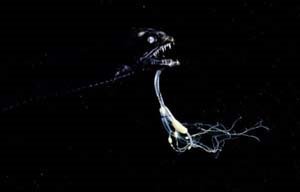
Artwork: Scott Bolohan
Many thanks to The Twin Bill for nominating me for a Pushcart Prize, for my poem “Under Green Light.”

The Twin Bill announcement: https://thetwinbill.com/category/2021-pushcart-nominee/

My poem “Under Green Light”: https://thetwinbill.com/under-green-light/

i. m. Allen Kirkpatrick

Allen Kirkpatrick died on the afternoon of December 10, 2021. Allen was a life-long friend and artistic influence, a filmmaker and poet.  As an American experimental filmmaker, he was active in the avant-garde film scene beginning in the late 1960s and primarily in the 1970s, in New York City.  His first major 16mm film, Orange Jesuit (see below) is dated from 1972.  Neon (also given in the linked video file) is from 1971.

Orange Jesuit deals with conceptions of religion, demonstrated primarily through juxtaposition and contrast (the title itself is inherently paradoxical), informed to some extent by Mao’s theory of contradiction (which in turn is of course more broadly related to Marxist dialectics).  The film is also informed to a degree by Gerard Manley Hopkins’s poem “Hurrahing in Harvest”: “The heart rears wings bold and bolder / And hurls for him, O half hurls earth for him off under his feet”—with the filmmaker himself, who appears as the protagonist throughout, seen “off under his feet” at the conclusion.

Kirkpatrick began his artistic career as a poet in Philadelphia, before moving to Manhattan and into film and visual art as well as continuing to write poetry.  His magnum opus is perhaps Adrenalin Devours the Blood (1975), which includes live footage of Lou Reed.

Obituary: https://www.altoonamirror.com/obituaries/2021/12/allen-kirkpatrick/

R. Allen Kirkpatrick, 1937-2021.

Saturday, October 30, 2021

Poem in The Twin Bill


I have a poem in the latest issue of The Twin Bill, a journal of baseball literature and art.  I would say that the poem (“Under Green Light”) is not concerned with the realism of an actual baseball game, so much as it is with non-ordinary mind states and with absorption in an ongoing moment, non-linear time.

Read the poem here: https://thetwinbill.com/under-green-light/

Saturday, October 23, 2021

The Music and Noise of the Stooges, 1967-71: Lost in the Future

Cover photo: Douglas R. Gilbert
My book The Music and Noise of the Stooges, 1967-71: Lost in the Future, a critical study of the Stooges, is now published by Routledge.

Here is the webpage for the book: https://www.routledge.com/The-Music-and-Noise-of-the-Stooges-1967-71-Lost-in-the-Future/Begnal/p/book/9780367648435

Here is the back matter:

The Stooges have come to be considered one of the most important rock bands, especially in regard to the formation of punk. By emphasizing their influence on later developments, however, critics tend to overlook the significance of the band in their own context and era. The Music and Noise of the Stooges, 1967–71 addresses such oversights.

Utilizing the lenses of cultural criticism and sound studies (drawing on the thinking of Theodor Adorno, Jacques Attali, and Pierre Bourdieu, among others), this extensively researched study analyzes the trajectory and musical output of the original Stooges. During the late 1960s and early 70s, a moment when the dissonant energy of rock’n’roll was more than ever being subsumed by the record industry, the Stooges were initially commercial failures, with the band’s “noisy” music and singer Iggy Pop’s “bizarre” onstage performances confusing their label, Elektra Records. As Begnal argues, the Stooges embodied a tension between market forces and an innovative, avant-garde artistic vision, as they sought to liberate audiences from passivity and stimulate an immanent joy in the rock’n’roll moment.

This book, which includes new material gleaned from first-person interviews and engages with less-trodden archival texts, offers a fresh perspective on the Stooges that will appeal both to rock fans and scholars (especially in the fields of cultural studies, punk studies, and performance studies).

Oblivion Demo Tape, 1985


Oblivion is a band I co-founded in Philadelphia in the fall of 1984. Originally, the band was the four-piece lineup of Steve Lukshides (who had formerly been bassist in YDI), Marc Fernich (ex-Kremlin Korps and Vatican Commandos), and myself (formerly of Wasted Talent), with Todd Cote on vocals. After Todd left the band, Dave Wynter replaced him as singer, and Fil Cerny was brought on as second/lead guitarist. Oblivion played frequently in the Philly punk/hardcore scene between 1984-86, finally breaking up in late ’86.

Our two-song demo tape was recorded in 1985 at Philly's Spectrum Studios.

See also the Oblivion article at Freedom Has No Bounds.

Tuesday, September 14, 2021

On the Power of Poetry

In an age where poetry is marginalized, are there ways in which poetry can be powerful?  There are some poets might impute to themselves, or to poetry generally, a level of public importance that it doesn’t have outside of their own perhaps insular poetry circle (and of course there are numerous different poetry circles out there).  But poetry does often seem to be completely ignored by “the general population,” and so it is always a good reminder to check ourselves and our egos, especially in the face of the relative lack of attention to poetry “out there” in the wider world.

It is also, however, good to be reminded of how powerful poetry really is for the minority of us who practice and read it, and I affirm all of the various expressions of that that ensued.  Moving away from such eminently valid individual attestations of the importance of poetry, two particular texts come to me that further articulate the power that poetry can have.  One is Audre Lorde’s essay “Poetry Is Not a Luxury” (1977), which I return to frequently.  While I realize that I am not Lorde’s primary audience in that essay, with my own position(ality) in mind I am nonetheless always struck when she writes,

Poetry is not only dream and vision; it is the skeleton architecture of our lives.  It lays the foundations for a future of change, a bridge across our fears of what has never been before.
 …
The white fathers told us: I think, therefore I am.  The Black mother within each of us — the poet — whispers in our dreams: I feel, therefore I can be free.  Poetry coins the language to express and charter this revolutionary demand, the implementation of that freedom. (38)

Here, not only does Lorde delineate the power of poetry as personal, political, and beyond, she also critiques those very same Enlightenment values that the Western chauvinists invoke in their quest to uphold white supremacy — the notion that “logical” debate is an inherently positive value (i.e. rather than one that historically tends to benefit white, male, privileged property-holders).  Actually, while Lorde skillfully exposes the tyranny of rationality (here expressed in the Cartesian mind/body split of “white father” thinking), she goes on to identify the fusion of thought and feeling as the best framework for approaching both poetry and political action, and her essay is one of the best I can think of that expresses why, as her title argues, poetry is not a luxury but a necessity in the lives of many.  (Even Auden, in his poem, went on to assert that poetry is “a way of happening, a mouth.”)

The other text is Gary Snyder’s The Real Work: Interviews & Talks, 1964-79 (1980).  In a 1977 interview, Snyder responds to the Auden line by pointing out that poets “are out at the very edge of the unraveling cause-and-effect network of a society in time” (71).  For Snyder, poets do have a social and political function (and what is “power” if not the function of politics?), though it might be out of the mainstream discourse and thus unrecognized as powerful.  Snyder goes on to elaborate that poets are also
tuned into other voices than simply the social or human voice.  So they are like an early warning system that hears the trees and the air and the clouds and the watersheds beginning to groan and complain a little bit. . . . They also can hear stresses and the fault block slippage creaking in the social batholith and also begin to give out warnings. . . . Poetry effects change by fiddling with the archetypes and getting at people’s dreams about a century before it actually effects historical change.  A poet would be, in terms of the ecology of symbols, noting the main structural connections and seeing which parts of the symbol system are no longer useful or applicable, though everyone is giving them credence. (71)

For Synder, poets are (or can be) a kind of advance platoon (even a century in advance) of cultural experimenters who critique existing certainties and in their work register the limitations of dominant narratives.  Both Snyder and Lorde see poetry as existing at least partly in the realm of the dream, and thus point to non-Cartesian, non-rational means of making meaning and even making arguments.

In a way, this is the true sense of the term “avant-garde” — to make that new meaning through new forms of art and modes of living (rather than avant-garde in the mere sense of now-recognized stylistic departures) — Lorde’s “dream and vision” and “skeleton architecture.”  What is becoming increasingly clear is that political systems and social values, no matter how much “everyone [supposedly] is giving them credence” (per Snyder), which privilege a dominant class and thus inherently oppress others (whether classes of people or even non-human animals and nature), should no longer be given such credence — in poetry or elsewhere.

Friday, July 02, 2021

Wasted Talent - 3 Songs from The Master Tape Vol. 2 LP (1983)

Wasted Talent was a hardcore/punk band I co-founded in 1981.  These songs were recorded on Sept. 15, 1982, at Red Dog Studios (Filmspace), State College, Pennsylvania, as part of our demo tape (cassette album) titled Self Rule (released late 1982).  In spring or summer of 1983, we remixed these three songs for The Master Tape Vol. 2 compilation (Affirmation Records, 1983).  When we were asked to be on that compilation by Paul Mahern of the Zero Boys and Affirmation Records, we decided to go back to the studio and remix the three songs because we had felt that the guitar on the demo tape was too low in the mix (and we had mastered it with the Dolby on!).  These are the remixed versions, which only appeared on that vinyl album, and what you hear in this video file is a vinyl rip.  The studio tape of the remix has since disappeared, and so these versions only exist on the vinyl compilation album and the digital transfer.


Sunday, June 13, 2021

Recap of May IAWA Salon Reading


Here is a recap of the May 11, 2021, Irish American Writers and Artists “Salon” reading. Along with my couple of poems, and other readers and performers, was Malachy McCourt. The linked post says some nice things.
 

I chose this photo because the IAWA’s mission states that “IAW&A is committed both to bringing together the Irish American creative community in new self-awareness and to being a force for inter-ethnic and interracial solidarity, understanding and active cooperation.”

Monday, May 24, 2021

Tropospheric Clouds Reviewed at Elliptical Movements


My chapbook Tropospheric Clouds (Adjunct Press, 2020) is reviewed by Billy Mills at his poetry blog, Elliptical Movements. Mills writes, among other things, that “This expansive economy is typical of Begnal at his best, and he is at his best here.”
Read the review: https://ellipticalmovements.wordpress.com/2021/05/24/recent-reading-may-2021/

Get the book: https://adjunctpress.com/chapbooks/tropospheric-clouds-by-michael-begnal-2020/

Thursday, May 20, 2021

John Goodby’s The Ars

John Goodby’s short collection The Ars (Red Ceilings Press, 2020) does double-duty as a serious statement (an ars poetica) and as ludic undertaking (is it all a big joke, ars = arse?).  As such (as both), its central theme is the artifice of language and thus the artifice of poetry.  It is very earnest as a project that foregrounds language as a construct (very Language Poetry), but this seriousness is constantly undermined by the double-entendres and plays on words that proliferate throughout.  To steal something of Goodby’s modus operandi for a moment, just now I accidentally typed “undermind” in place of “undermined,” and I suppose I could end the review right there, because that may be his real aim, to show through poetry the workings of the mind as constructed by language, the workings of the mind underneath our perception of a stable world.  All throughout these poems we think we are on the verge of true meaning, only to find that it eludes our grasp, exposed as a metaphor or resonance of sound.

For example, the poem “N” ends with the lines:
Time hip-hops the resent tense
With counter winds as walls
Face off flow, coasts lose face.
And, facing the head-on seas,
The lowly feel like winning.
The soundplay here is so dense that it wants to take over from the attempt to parse meaning out of this.  Additionally, there are multiple meanings, of “resent[ment]/recent/present,” something about the nature of time and verb-tense, then the various senses of “face” and “facing,
losing face versus “winning,” even an oblique gesture to the verbal jousting of hip-hop performance.  Similarly, the poem “Ultras” has a “flash / like morning // flesh,” and then the imperative “Plough on black fur / till the broken / star turns and grows // a first dropping in think.”  It’s the soundplay again that drives the poem — “flash/flesh,” the assonance of “fur/turns” and “broken/grows” — and which creates the illusion of a kind of symmetry. Only, we find that it doesn’t finally add up, and the summative phrase “dropping in think,” which suggest an idea, is deferred by the just-slightly-off-kilter syntax.  But that is the point, that it graphs the mind’s attempts to make sense from the nuts and bolts of language that don’t necessarily compose a finished object.

Reading these poems is something like being in the midst of a dream, where we feel we’ve just about grasped something, only to find that it is vanishing right in front of us.  One would be tempted to say that Goodby’s work creates its own dream-like world of the mind.  Of course, as soon as one says “dream-like,” the immediate association is James Joyce’s Finnegans Wake, or even more likely surrealism.  These poems do employ some of the strategies of surrealism — e.g. in images and metaphors such as “feathered crazy footage / Of statues, hydrants, the gas beach / Unleashed in spurts” (“Day in the New” vii) and “We distorted torsos of foam into sand, / Matter-energy of the insurgents of air” (“Surgical”).  Here, on the surface at least, the methodology seems to correspond with André Breton’s.  However, it is not so much a question of dragging the unconscious or illogical into the light of the conscious or logical, as it is of exposing the sand of logic itself as made of foam or air.  But then, my analogy here assumes that sand is hard and concrete as opposed to the abstractness of foam or air — yet, sand is also metaphorically “shifting sand,” “castles made of sand,” etc.  It is all matter-energy.

Like the protagonist of Jorge Luis Borges’s story “The Circular Ruins,” who seeks to dream into existence a man “with minute integrity,” Goodby dreams these poems onto the page only to reveal that we are all part of the dream, reader and poet alike.  As he writes in “The Ars” (the title poem), at first “he cannot imagine yet / ripped space”; finally, however, “his dream inscrutably feeds / on itself wrings pain bodies dry.”  The body “dry,” the table-soccer player of The Ars’s cover photo (taken by the author himself), a simulacrum, the seam of the mold visible from the crown of the head on down.  As the concluding poem, “Llu” (meaning “power” in Welsh), reminds, “To happen is finished and about to.”  That is, it is “finished” by fashioning hands, or in the case of the figure in the photo, not so finished; indeed, these poems are always about to be, but never quite, and in this manner, are.

Sunday, May 09, 2021

Reading at IAWA Salon, May 11

I’ll be reading a couple/few poems at the Irish American Writers and Artists (IAWA) virtual salon, on Tuesday, May 11, at 7pm Eastern (midnight Irish time, 4pm Pacific time).  Aside from myself, the event includes Patricia Brody, Brendan Costello Jr., Derek Dempsey, Alexandra Williamson of the Darrah Carr Dance Company, and others.

Register for the Zoom link here: https://us02web.zoom.us/meeting/register/tZYrc--srD0sHdfWJYRRhHldBKC75pR-KlIG


Wednesday, March 17, 2021

Lá na Féile


Cnoc na Teamhrach
Ar an lá seo, seasaim le heisimircigh agus le himircigh ar fud an domhain. Seasaim freisin le cultúir dúchasacha agus teangacha dúchasacha ar fud an domhain. Cé raibh Pádraig ina himirceach, agus cé go dtuigim an meas atá ag daoine air mar naomh, ba chóir a lua gur teacht an mhisnéire seo ab chúis le lagú cultúr dúchasach na hÉireann. Mar sin, seasaim freisin lena draoithe, lena hÉireannaigh pagánacha, lena filí srl. a chaill a gcultúr nuair a chuir an Eaglais deireadh lena seanghnásanna agus cuid mhór an seanchais de réir a chéile.

Sunday, March 07, 2021

17-Word Poem


Many thanks to IAWA (Irish American Writers & Artists, of which I am a member) for sharing my 17-word poem “Tree Ogham” as part of their #Salon17 initiative.

Monday, February 01, 2021

Poem: The Ewes at Imbolc

It being Imbolc today, here is an Imbolc poem of mine, for Brighid (the Gaelic goddess of poetry et al., whose day it is). The poem was originally published in an anthology that is apparently now out of print (The Poet's Quest for God, 2016, pp. 59-60).